Pelvic Floor Chair for Incontinence Vs. Elitone: Which Incontinence Treatment is Right for You?

Electromagnetic pelvic floor chairs and wearable devices such as Elitone offer noninvasive ways to treat urinary incontinence. Both activate the pelvic floor without requiring you to coordinate each muscle contraction yourself, but they use different technologies and treatment approaches.

A pelvic floor chair is an in-office system offered by a healthcare or wellness provider. Several manufacturers produce electromagnetic pelvic floor chairs, with Emsella being one widely recognized example. Elitone is an external, wearable device used privately at home.

Updated: August 15, 2026
Author: Elitone Editorial Team

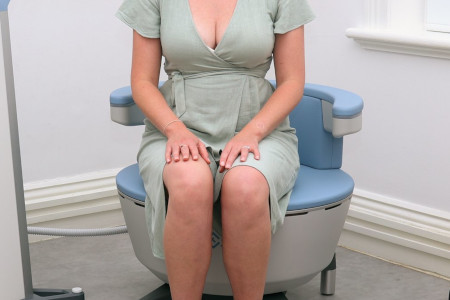
Woman sitting fully clothed on an electromagnetic pelvic floor chair for incontinence treatment

What Is a Pelvic Floor Chair?

A pelvic floor chair is a medical device designed to activate pelvic floor muscles while the patient sits fully clothed. These systems may be offered by urology, urogynecology, women’s health, physical therapy, or medical aesthetics practices.

Most pelvic floor chairs use electromagnetic energy to stimulate the motor nerves that control the pelvic floor. This causes repeated involuntary muscle contractions without requiring the patient to consciously perform Kegel exercises.

A pelvic floor chair may appeal to someone who wants a provider-administered treatment and can attend a series of scheduled appointments. However, the chair remains at the provider’s office, so initial and maintenance treatments require return visits, and payment is typically per visit.

How Do Electromagnetic Pelvic Floor Chairs Work?

Electromagnetic pelvic floor chairs generate a magnetic field that passes through clothing and stimulates nerves connected to the pelvic floor muscles. Some manufacturers describe their technology as high-intensity focused electromagnetic stimulation, or HIFEM. The precise technology and treatment settings can vary by manufacturer.

The stimulation causes the pelvic floor muscles to contract repeatedly during the session. These contractions are intended to strengthen weakened muscles, restore neuromuscular control, and improve the pelvic floor’s ability to support the bladder and urethra.

A chair-based session commonly lasts about 30 minutes. Treatment schedules vary by manufacturer and provider, but many practices recommend an initial series of approximately 6-12 sessions, often scheduled twice a week. Additional or periodic maintenance sessions are often required based on the patient’s response.

During treatment, the patient remains seated and clothed. Strong pelvic floor contractions and tingling may be felt, but chair-based treatment generally does not require a recovery period.

What Is Elitone?

Elitone is an FDA-cleared, external treatment for stress urinary incontinence in women. Rather than generating electromagnetic energy from a chair, Elitone delivers neuromuscular electrical stimulation through a soft GelPad placed against the skin in the perineal area.

The signals activate the pelvic floor muscles and produce 100 pelvic floor contractions and rest cycles during each 20-minute session. This helps strengthen the muscles involved in preventing leaks when you cough, laugh, sneeze, exercise, lift, or otherwise place pressure on the bladder.

Elitone is used at home and worn under clothing. You can sit, stand, walk around, prepare a meal, work at a desk, or complete other everyday activities during treatment. Nothing is inserted into the vagina.

The standard treatment schedule is 20 minutes per session, four or five times per week, for six to twelve weeks. Because the device remains with the user, it can also be used for occasional maintenance treatment if needed.

FeatureElectromagnetic pelvic floor chairElitone
Treatment typeChair-based electromagnetic stimulationWearable neuromuscular electrical stimulation
TechnologyElectromagnetic or magnetic stimulation; technology varies by manufacturerSurface-applied electrical stimulation
Treatment locationProvider’s office or clinicAt home
ClothingPatient remains fully clothedWorn discreetly under clothing
Vaginal insertionNoneNone
Typical sessionAbout 30 minutes20 minutes
Initial scheduleOften approximately 6-12 office visits4–5 sessions per week for 6–12 weeks
During treatmentPatient remains seated on the chairUser can sit, stand, or move around
Provider requiredYes, for every treatmentNo prescription required for retail purchase
OwnershipProvider owns the chairUser owns the device
MaintenanceAdditional office visits may be neededCan be performed at home
Typical paymentProvider-priced package of treatmentsOne-time device purchase plus replacement GelPads
InsuranceFrequently offered as a self-pay treatmentMay be covered by Medicare or some private insurance plans with a prescription
May appeal toSomeone who prefers provider-administered treatmentSomeone who values privacy and flexible at-home treatment

Pelvic Floor Chair vs. Elitone: The Main Differences

The most important difference between an electromagnetic pelvic floor chair and Elitone is not simply that one is a chair and the other is wearable. They deliver stimulation in fundamentally different ways.

A pelvic floor chair generates an electromagnetic field that activates the pelvic floor while the patient sits on the chair. Elitone places electrical stimulation close to the targeted muscles through an external GelPad worn against the skin.

Both approaches produce involuntary pelvic floor muscle contractions, so neither depends on the user correctly coordinating every contraction. However, their treatment schedules, locations, costs, and maintenance requirements are different.

Chair-based systems concentrate treatment into a limited number of appointments but require travel to a participating provider. Elitone involves more frequent sessions over several weeks, but treatment can be completed privately at home while doing other things.

Treatment Location and Convenience

Pelvic floor chairs require scheduled office visits

A pelvic floor chair may be convenient for someone who prefers having each session administered by a provider. Once the appointment begins, the patient simply remains seated on the chair for the prescribed treatment.

The tradeoff is that each treatment requires scheduling, travel, and time at the clinic. Availability may also depend on whether a participating provider is located nearby.

If maintenance treatments are recommended later, the patient must return to a provider with a compatible chair. Treatment cannot be continued independently at home.

Elitone is designed for home use

Elitone allows treatment to fit into a normal daily routine. The GelPad fits in approximately the same area where a normal absorbent pad would go, and the controller clips to clothing.

Treatment can be completed while working, cooking, folding laundry, walking around the house, or relaxing. Unlike chair-based treatment, using Elitone does not require setting aside time to travel to and from an appointment.

For women who have difficulty scheduling repeated office visits, live far from a participating provider, or prefer to treat bladder leaks privately, at-home use may be a significant advantage.

Learn more about how Elitone works and how its external GelPad activates the pelvic floor.

Cost and Insurance Coverage

The cost of an electromagnetic pelvic floor chair treatment series varies by provider, manufacturer, treatment schedule, and geographic area. Because the chair is owned and operated by the practice, patients generally pay for a package of individual sessions, typically totally more than $1200.

Before purchasing a chair-based treatment package, ask how many sessions are included, whether follow-up assessments are provided, and whether future maintenance sessions will cost extra.

Elitone is purchased as a personal medical device. The current retail price starts at $429, with payment plan options available.

Pelvic floor chair treatments are commonly presented as self-pay services. Elitone is eligible for payment with HSA or FSA funds. It is also covered by Original Medicare and certain private insurance plans when medical requirements are met and a prescription is obtained. Coverage and patient responsibility depend on the individual insurance plan.

When comparing prices, consider the entire initial treatment course and the expected cost of maintenance, not simply the advertised price of one session.

Effectiveness and Clinical Evidence

Clinical research has reported improvements in urinary incontinence symptoms after both chair-based electromagnetic stimulation and surface-applied electrical stimulation. However, the available products have not been compared in a large, independent head-to-head clinical trial.

Studies may enroll different types of patients and use different treatment schedules, devices, outcome measurements, and follow-up periods. Results from separate studies therefore should not be interpreted as proof that one treatment is more effective than the other.

Evidence for electromagnetic pelvic floor chairs

Published studies of HIFEM and other forms of chair-based magnetic pelvic floor stimulation have reported improvements in urinary incontinence symptoms, pelvic floor function, pad-test results, and quality-of-life measurements.

The overall body of research continues to develop. Studies differ in design, the technology evaluated, patient selection, treatment protocol, comparison group, and length of follow-up. Results for one chair or treatment protocol may not necessarily apply to every electromagnetic pelvic floor chair.

Evidence for Elitone

Elitone has been evaluated in multiple clinical studies. In studies supporting its use for stress urinary incontinence, women experienced an average leak reduction of more than 70% after six weeks, and 95% of participants experienced fewer leaks. Pad use and incontinence-related quality of life also improved.

Elitone Urge uses a different stimulation program designed for urgency leaks and overactive bladder. In its clinical study, 97% of participants experienced some reduction in urge leaks after six weeks, while 76% achieved a clinically significant reduction.

These results represent averages from study populations. Individual results vary, and some women may need a different treatment or a combination of approaches.

Which Treatment Is Right for You?

An electromagnetic pelvic floor chair may be worth considering if you:

  • Prefer treatment administered in a provider’s office
  • Can attend multiple scheduled appointments
  • Have been evaluated by a provider who recommends chair-based treatment
  • Are comfortable returning to the provider for possible maintenance sessions

Elitone may be worth considering if you:

  • Want to complete treatment privately at home
  • Prefer a device you own and can reuse for maintenance
  • Do not want to schedule repeated clinic visits
  • Want to move around or complete other activities during treatment
  • Want to explore Medicare or private insurance coverage

Your type of incontinence matters

Stress incontinence causes leakage when physical pressure is placed on the bladder, such as during coughing, laughing, sneezing, jumping, lifting, or exercise. Standard Elitone is intended to treat stress and mixed urinary incontinence.

Urge incontinence involves a sudden, difficult-to-control need to urinate that may be followed by leakage before reaching a bathroom. Women whose primary symptom is urgency should consider Elitone Urge.

If you are unsure which type of leakage you have, review the differences between stress and urge incontinence before selecting a treatment.

When to speak with a healthcare provider first

You should review contraindications before beginning either treatment. Electromagnetic and electrical stimulation devices may not be appropriate for people with certain implanted electronic devices, metal implants, pregnancy, or other medical conditions.

The contraindications are not identical across products. Follow the instructions for the specific chair or at-home device being considered and discuss any questions with a qualified healthcare provider.

Other Treatment Options

A pelvic floor device is not the only way to treat urinary incontinence. Depending on the type, cause, and severity of leakage, a treatment plan may include:

  • Pelvic floor exercises or pelvic floor physical therapy
  • Bladder training and scheduled bathroom visits
  • Changes in fluid intake or caffeine consumption
  • Constipation management
  • Weight management when appropriate
  • Medication for overactive bladder
  • Pessaries or other support devices for stress incontinence
  • Urethral bulking injections
  • Neuromodulation treatments
  • Surgery for stress urinary incontinence

Some women use electrical or electromagnetic stimulation alongside pelvic floor physical therapy. A pelvic floor physical therapist can evaluate muscle strength, coordination, endurance, and excessive muscle tension before recommending an individualized plan.

For a broader comparison, review treatment options for stress urinary incontinence.

Choosing Between an Incontinence Chair and an At-Home Device

There is no single pelvic floor treatment that is best for every woman. An electromagnetic pelvic floor chair offers a fully clothed, provider-administered experience. Elitone offers an external, wearable treatment that can be used privately at home while you go about your day.

The most useful comparison is not simply how many contractions a manufacturer says its device produces. Consider whether the treatment matches your type of leakage, whether you can follow the recommended schedule, how future maintenance will work, and what the full cost will be.

If flexibility, privacy, and the ability to continue treatment at home are priorities, explore Elitone for stress and mixed incontinence.

Disclosure: Elidah, Inc., the publisher of this article, manufactures Elitone and Elitone Urge. Information about electromagnetic pelvic floor chairs is included to help readers understand the differences between commonly considered noninvasive treatment approaches. Elidah is not affiliated with the manufacturers of these chair-based systems.

Explore how Elitone can help reduce bladder leaks

Frequently Asked Questions

What is an electromagnetic pelvic floor chair?

An electromagnetic pelvic floor chair is an in-office device that uses a magnetic field to stimulate nerves and muscles in the pelvic floor. The patient sits fully clothed while the stimulation produces repeated involuntary muscle contractions.

Is Elitone the same as a pelvic floor chair?

No. A pelvic floor chair generates electromagnetic stimulation while the patient sits on equipment located in a provider’s office. Elitone is a wearable, at-home device that delivers neuromuscular electrical stimulation through an external GelPad.

Does Elitone use electromagnetic or HIFEM technology?

No. Some pelvic floor chairs use technology described as HIFEM or high-intensity focused electromagnetic stimulation. Elitone uses surface-applied neuromuscular electrical stimulation to activate pelvic floor muscles and surrounding structures.

Do you remain clothed during treatment?

Yes. Patients remain fully clothed while sitting on a pelvic floor chair. Elitone is first applied to clean skin in the perineal area and is then worn discreetly under clothing during the 20-minute treatment.

Does either treatment require vaginal insertion?

No. Electromagnetic pelvic floor chairs work while the patient sits clothed on the chair. Elitone delivers stimulation through a GelPad placed externally against the skin. Neither treatment requires a vaginal probe.

Can a chair or Elitone replace Kegel exercises?

Both treatments cause pelvic floor muscle contractions without requiring the user to coordinate each contraction voluntarily. However, some patients may still benefit from pelvic floor exercises or physical therapy to improve coordination, breathing, relaxation, and everyday use of the muscles.

How many pelvic floor chair treatments are usually needed?

Treatment plans vary by manufacturer and provider. A commonly offered starting schedule is approximately six to twelve sessions, often performed twice a week. Additional or maintenance sessions may be recommended based on the patient’s response.

How often is Elitone used?

Elitone is generally used for 20 minutes per session, four or five times per week, for six to twelve weeks. The device can then be kept at home for maintenance use when needed.

Which option costs less?

Costs depend on the chair provider, the number of sessions purchased, future maintenance, and possible insurance benefits. Elitone begins at $429 as a one-time device purchase, with replacement GelPads available for maintenance as needed. Chair-based treatment is normally purchased as a package of office sessions.

Is Elitone covered by insurance?

Elitone is covered by Original Medicare and certain private insurance plans when applicable medical requirements are met and a prescription is obtained. Coverage is not guaranteed and depends on the individual plan. Elitone is also HSA- and FSA-eligible.

Which treatment should I choose for urge incontinence?

If urgency is your primary symptom, it is important to select a treatment intended for overactive bladder and urge leakage. Elitone Urge uses a different stimulation program from standard Elitone. A healthcare provider can also help determine whether bladder training, medication, neuromodulation, or another treatment is appropriate.

Are pelvic floor stimulation devices safe?

Electrical and electromagnetic treatments have important contraindications and precautions. People with implanted electronic devices, certain metal implants, pregnancy, or specific medical conditions may not be eligible. Review the instructions for the particular product and speak with a healthcare provider if you are uncertain.

References

Kolb G, Kolb E, Richmond C, Hanson C. Surface-Applied Electrical Muscle Stimulation for Self-Administered Treatment of Female Stress Urinary Incontinence. Journal of Women’s Health Physical Therapy. 2019;43(4):188–193.

Samuels JB, Pezzella A, Berenholz J, Alinsod R. Safety and Efficacy of a Non-Invasive High-Intensity Focused Electromagnetic Field Treatment for Women With Urinary Incontinence. Lasers in Surgery and Medicine. 2019;51(9):760–766.

Silantyeva E, Zarkovic D, Soldatskaia R, Astafeva E, Mekan M, Ter-Ovanesov M. A Comparative Study on the Effects of High-Intensity Focused Electromagnetic Technology and Electrostimulation for the Treatment of Pelvic Floor Muscles and Urinary Incontinence in Parous Women. Female Pelvic Medicine & Reconstructive Surgery. 2021;27(4):269–273.

Sacarin G, et al. Chair-Based Magnetic Pelvic Floor Stimulation and Female Urinary Incontinence: A Systematic Review. 2025.

Stewart F, Berghmans B, Bø K, Glazener CMA. Electrical Stimulation With Non-Implanted Devices for Stress Urinary Incontinence in Women. Cochrane Database of Systematic Reviews. 2017.

ClinicalTrials.gov. Efficacy of Surface Electrical Stimulation for Urge Urinary Incontinence. NCT04752709. Accessed August 15, 2026.

Elidah, Inc. The Science Behind Elitone. Accessed August 15, 2026.