How Yoga Can Support the Pelvic Floor
The pelvic floor works together with the diaphragm, abdominal muscles, hips, and spine to help manage pressure and support the bladder and other pelvic organs. Yoga can support this system by improving body awareness, breathing, posture, mobility, and muscle coordination.
Some poses encourage gentle strengthening, while others emphasize relaxation and lengthening. That balance matters because pelvic floor symptoms are not always caused by weakness alone.
If your main goal is bladder control, yoga can be a useful complement to more targeted pelvic floor exercises, especially when breathing and posture are part of the routine.
Pelvic Floor Strength vs. Relaxation
A healthy pelvic floor needs to do two things well: contract when support is needed and relax when tension is no longer necessary.
Women with stress urinary incontinence may benefit from improving pelvic floor strength and timing, especially during coughing, sneezing, lifting, or exercise. But women with pelvic pain, urgency, constipation, painful intercourse, or difficulty relaxing may have an overactive or overly tight pelvic floor.
For that reason, the goal of pelvic floor yoga is not to squeeze constantly. Instead, focus on coordinated breathing, controlled movement, and allowing the pelvic floor to both engage and release.
1. Chair Pose (Utkatasana)
Chair Pose can challenge the hips, thighs, core, and pelvic floor while teaching you to coordinate muscle activation with breathing.
- Stand with your feet about hip-width apart.
- Inhale and lengthen through the spine.
- As you exhale, bend your knees and shift your hips back as though you are sitting into a chair.
- Keep your chest lifted and your weight balanced through your feet.
- Gently engage the pelvic floor without holding your breath or bearing down.
- Hold for several breaths, then return to standing and relax fully.
Avoid gripping the pelvic floor as hard as possible. The goal is coordinated support during movement rather than constant tension.
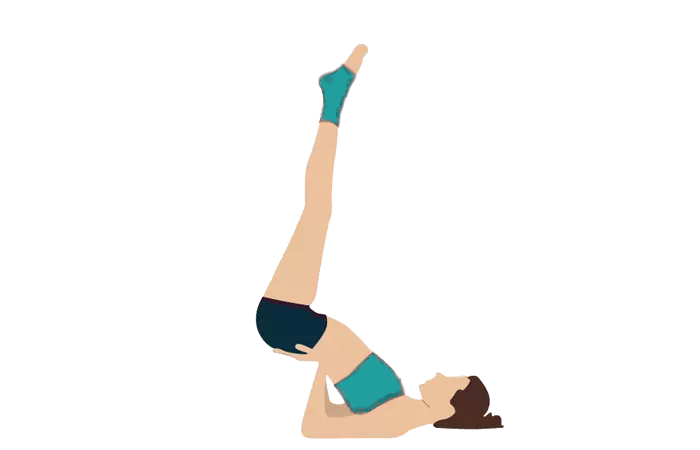
2. Legs Up the Wall (Viparita Karani)
Legs Up the Wall is a restorative pose that encourages relaxation, slower breathing, and reduced muscular tension. It can be especially useful if your pelvic floor tends to feel tight or fatigued.
- Sit beside a wall and gently swing your legs upward as you lower your back to the floor.
- Let your legs rest comfortably against the wall.
- Allow your arms to relax at your sides.
- Breathe slowly into your lower ribs and abdomen.
- As you inhale, imagine the pelvic floor gently softening and lengthening.
- Stay in the pose for several comfortable breaths or longer if it feels good.
This pose is more about relaxation and awareness than strengthening.
3. Mountain Pose (Tadasana)
Mountain Pose looks simple, but it can help you practice alignment, breathing, and pelvic floor coordination while standing.
- Stand tall with your feet comfortably apart and your weight evenly distributed.
- Relax your shoulders and allow your ribs to stack naturally over your pelvis.
- Breathe normally without pulling your stomach in tightly.
- As you exhale, gently lift the pelvic floor.
- As you inhale, allow the pelvic floor to relax.
This can be a useful way to practice pelvic floor control in a functional upright position rather than only while lying down.
4. Triangle Pose (Trikonasana)
Triangle Pose can improve hip mobility, trunk control, and body awareness while encouraging coordinated breathing.
- Stand with your feet wide apart.
- Turn one foot outward while keeping the opposite foot slightly angled inward.
- Extend your arms out to the sides.
- Reach over the front leg and lower your hand toward your shin, ankle, or a block.
- Keep your chest open and avoid collapsing forward.
- Breathe slowly and allow the pelvic floor to respond naturally rather than forcefully contracting throughout the pose.
If you feel strain, pressure, or difficulty breathing, reduce the depth of the pose.
5. Corpse Pose (Savasana)
Savasana is a useful way to finish a pelvic floor yoga routine because it encourages complete relaxation and helps you notice whether you are holding unnecessary tension.
- Lie comfortably on your back with your legs relaxed and arms at your sides.
- Close your eyes if comfortable.
- Allow your abdomen, hips, buttocks, and pelvic floor to soften.
- Breathe slowly and evenly.
- With each inhale, imagine the pelvic floor gently expanding and relaxing.
This relaxation phase is just as important as strengthening, especially if you tend to clench the pelvic floor throughout the day.
How Often Should You Practice?
You do not need a long yoga session to benefit from pelvic floor awareness. A short routine practiced several times per week can help reinforce breathing, posture, and coordination.
Choose poses that feel comfortable and avoid pushing through pain, pelvic pressure, or urinary symptoms. Consistency and good technique are more useful than forcing deeper positions or longer holds.
When Yoga May Not Be Enough
Yoga can support pelvic floor function, but it may not be enough on its own if you have persistent bladder leakage, significant pelvic floor weakness, pelvic pain, or difficulty identifying the correct muscles.
A pelvic floor physical therapist can assess whether weakness, tension, coordination, or another issue is contributing to your symptoms.
For women with stress or mixed urinary incontinence who want an external treatment option, Elitone uses neuromuscular electrical stimulation to create repeated pelvic floor contractions during a 20-minute treatment session. Elitone URGE is often used for too-tight muscles to relax the bladder muscles and surrounding tissues.