Table of Contents
Why Can Cold Weather Suddenly Trigger a Bladder Leak?
For some women, bladder control seems noticeably worse as soon as the temperature drops.
One familiar experience is stepping from a warm house or car into cold air and immediately feeling your entire body tense. You may raise your shoulders, tighten your abdomen, clench muscles, or even begin to shiver.
That reaction is part of the body’s normal response to cold. Skeletal muscles generate heat through involuntary contractions such as shivering, and people also instinctively brace and tense when they suddenly feel chilled.
For a woman with strong pelvic floor and urethral support, that momentary increase in pressure may not matter. But if the pelvic floor is already weak, the sudden tightening and bracing through the abdomen and pelvis may create enough extra pressure on the bladder to trigger a leak.
It is similar to what happens with coughing, sneezing, laughing, or jumping: pressure suddenly increases, and the pelvic floor has to respond quickly enough to keep the urethra closed.
Cold Makes Your Muscles Tense and Brace
Your body has several ways to conserve and produce heat when exposed to cold. Blood vessels near the skin constrict, and skeletal muscles can begin contracting involuntarily to produce heat.
You may notice this before you are actually shivering. A sudden blast of cold often causes an instinctive whole-body “brace” — tightening the abdomen, shoulders, legs, and other muscles.
That does not mean cold directly weakens your pelvic floor. Rather, the sudden muscle tension can temporarily increase pressure through the abdomen and pelvis.
If weak pelvic floor muscles already contribute to stress urinary incontinence, they may not generate enough support quickly enough to counter that pressure.
That can help explain why a woman who feels relatively dry indoors may step into cold air and suddenly experience a small leak.
Bundling up can therefore do more than make an outdoor activity comfortable. Staying warm may reduce some of that sudden cold-related muscle bracing while also making it easier to relax and move normally.
Cold Weather Can Also Make You Produce More Urine
Muscle tension is not the only reason winter can challenge bladder control.
Cold exposure can also cause a phenomenon known as cold diuresis, in which the kidneys produce more urine.
When cold causes blood vessels near the skin to constrict, more blood is shifted toward the center of the body. The body responds to changes in circulation and blood volume by adjusting how much sodium and water the kidneys excrete.
The result can be more urine entering the bladder even though you have not necessarily consumed more fluid.
Research has also found that cold exposure can influence lower urinary tract signaling and urinary frequency. So for some people, winter can challenge bladder control in more than one way.
For women whose main problem is stress leakage, however, the sudden pressure created by cold-related bracing, coughing, sneezing, lifting, or activity may be the more noticeable trigger.
Other Reasons Bladder Leaks May Be Worse in Winter
Winter brings several other changes that can make an existing continence problem more obvious.
More Coughing and Sneezing
Cold and flu season means more coughing and sneezing — two classic triggers for stress urinary incontinence.
Each cough or sneeze produces a sudden increase in abdominal pressure. If the pelvic floor does not respond strongly enough, urine can escape.
Learn more in our guide to incontinence when coughing.
More Coffee, Tea, and Alcohol
Hot coffee and tea are winter staples, while holiday gatherings may mean more alcoholic drinks. Caffeine and alcohol can both increase urine production or worsen bladder symptoms in some women.
Our diet guidelines for incontinence explain how to identify personal food and drink triggers, while alcohol and incontinence explains why drinking can sometimes lead to a particularly difficult night of bladder leaks.
Bulky Winter Clothing
Heavy coats, layered pants, gloves, belts, and difficult fasteners do not cause incontinence, but they can make reaching the toilet in time more difficult.
Warm clothing is important. When possible, choose layers that keep you comfortable without making bathroom access unnecessarily complicated.
Less Physical Activity
Cold weather often means more time indoors and less movement. Staying active supports general health, bowel regularity, muscle conditioning, and weight management.
Bladder leaks should not become the reason you stop walking, hiking, playing outside, or doing the winter activities you enjoy.
5 Tips for Managing Leaks While Enjoying the Outdoors
Going outside with urinary incontinence can feel unpredictable, especially when you are headed somewhere unfamiliar. The goal is not to eliminate every possible risk before leaving home. A few practical precautions can give you enough confidence to get outside and enjoy yourself.
1. Plan Ahead
If you are going somewhere new, take a quick look at the layout before you leave and identify where bathrooms are likely to be.
Large parks, attractions, entertainment venues, orchards, winter festivals, and recreation areas often provide maps online. Knowing where a restroom is located can reduce anxiety without requiring you to organize the entire outing around bathroom access.
If you are going to a restaurant or event, choosing a seat that is easy to get out of may also help. An aisle seat or the end of a booth can give you those extra seconds when you need them.
2. Monitor Fluids — But Stay Hydrated
It can be tempting to avoid drinking before an outdoor activity because less fluid seems like it should mean fewer leaks.
But deliberately dehydrating yourself can create concentrated urine and contribute to constipation, potentially making bladder symptoms harder to manage.
Instead, stay normally hydrated and avoid drinking unusually large amounts all at once immediately before an outing. Sip fluids throughout the day and pay attention to your normal bladder signals.
3. Bring Backup
Even when you are treating your incontinence, a small backup can provide peace of mind.
Consider bringing:
- An extra pad or liner
- A dry pair of underwear
- A small disposable bag for wet clothing
- A lightweight change of pants for a longer outing if that makes you more comfortable
You may find over time that you use these backups less and less — which can be a reassuring way to notice that bladder control is improving.
4. Have a Bladder Buddy
Bladder leakage can feel isolating, especially when you are trying hard to keep anyone else from noticing.
If you are comfortable doing so, tell a trusted friend, partner, or family member what is going on. Knowing that someone understands why you may occasionally need an unexpected bathroom stop can take some of the pressure out of an outing.
Incontinence is common, and you do not have to manage every aspect of it privately.
5. Most Importantly: Treat the Underlying Incontinence
Planning, backup underwear, and knowing where the bathrooms are can make an outing easier. But none of those strategies change why the bladder is leaking.
If weak pelvic floor muscles are contributing to stress urinary incontinence, strengthening those muscles can improve their ability to support the urethra when pressure suddenly increases — whether that pressure comes from a cough, a laugh, a jump, or that instinctive full-body brace when you step into the cold.
The long-term goal is not to perfect your leak-management routine. It is to need fewer of these precautions because the underlying bladder control has improved.
Don’t Let Bladder Leaks Keep You Inside
Cold weather brings plenty of reasons to stay indoors, but fear of a bladder leak should not have to be one of them.
Take the walk through the snow. Go apple picking in the fall. Join your family at the pumpkin patch. Hike, garden, shovel the driveway, attend the outdoor game, or sit outside with friends.
These activities are part of living your life, and staying active has benefits for overall health well beyond the pelvic floor.
Temporary strategies such as wearing a pad or carrying extra underwear are perfectly reasonable while your bladder control improves. But if you find yourself repeatedly declining activities because bathrooms are uncertain or a leak would be embarrassing, that is a good reason to address the incontinence itself.
How Elitone Can Help With Cold-Weather Leaks
Elitone does not change your body’s normal response to cold. Instead, it strengthens the pelvic floor muscles that need to respond when pressure suddenly increases.
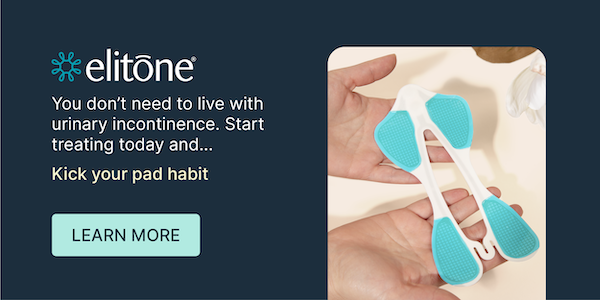
Elitone is an FDA-cleared external treatment for urinary incontinence that uses neuromuscular electrical stimulation to produce repeated pelvic floor contractions and strengthen the muscles involved in bladder and urethral support.
That makes it especially relevant for women who leak during pressure events such as coughing, sneezing, laughing, lifting, exercise — or when a sudden chill causes the body to tense and brace.
During a 20-minute treatment, Elitone does the pelvic floor contractions for you, helping strengthen these muscles without vaginal probes or relying on you to correctly perform every Kegel yourself.
As pelvic floor support improves, the goal is for everyday pressure changes to be less likely to result in a leak — so you can spend less time worrying about winter bladder control and more time enjoying what you went outside to do.