Electrical Stimulation for Incontinence
How Can This Treatment Help?
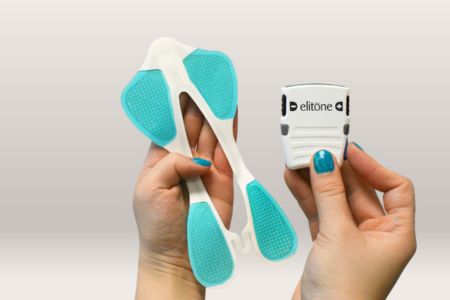
Electrical stimulation for incontinence is a treatment option that does the hard work for you. While there are lots of treatments available to help with incontinence, many of them are time-consuming, invasive, expensive, or simply don’t do anything on their own. For example, many kegel trainers simply show you if you are squeezing or not.
Electrical stimulation has been around for over 50 years and is one of the oldest treatments besides using weights. What it does is act like your brain sending signals to the targeted muscles to contract, only it “talks” to the pelvic floor muscles directly. Electrical stimulation has previously only been offered as a vaginal treatment until most recently. Now it can be found as an easy, non-invasive treatment option for incontinence that can help to tone your pelvic floor and improve bladder control.
Electrical stimulation works by sending gentle, controlled signals to the pelvic floor muscles. These signals prompt the muscles to contract and relax, helping re-engage muscles that may have become weak, poorly coordinated, or difficult to activate on their own.
For many women, bladder leaks aren’t just about muscle strength. They’re often related to muscles that don’t respond quickly enough, fatigue easily, or don’t coordinate properly with movement and pressure. Electrical stimulation helps “wake up” these muscles and reinforces proper activation patterns.
Over time, consistent stimulation helps improve pelvic floor muscle function, which can lead to better bladder support and fewer leaks during everyday activities like walking, coughing, lifting, or exercising.
Electrical stimulation is commonly recommended for women of all ages who experience bladder leaks and want a conservative, non-surgical treatment option. It may be especially helpful if you:
Many women turn to electrical stimulation when traditional exercises haven’t worked or when consistency with pelvic floor therapy has been difficult. It can be used on its own or alongside other pelvic floor treatments, depending on individual needs.
As you start to explore options for incontinence devices, you’ll find that some work internally and others work externally. While both are effective, there are several advantages to choosing an external solution like Elitone. Not only is it less invasive and more comfortable to use, especially if you are postpartum, but it is the only one that can also be used while continuing with other activities, because who has time to lie on your back every day with non-wearable devices? Elitone is worn; a pad would go, giving you freedom of movement during use.
Electrical stimulation for incontinence is designed to be gentle and comfortable. Most women describe the sensation as a mild tingling, tapping, or rhythmic muscle tightening. The intensity can be adjusted, and the treatment should never feel painful.
When delivered through FDA-cleared devices and used as directed, electrical stimulation is considered safe and has been used in pelvic floor therapy for decades. These devices are designed to target pelvic floor muscles without affecting surrounding organs or tissues.
If discomfort occurs, lowering intensity or adjusting placement usually resolves it. As with any therapy, consistency and proper use are important for both comfort and results.
For muscle contractions to treat stress incontinence, electrical stimulation has been offered as a vaginal device. However, electrical stimulation has also been used to calm overactive bladders or OAB as a surgical sacral nerve implant in your back, as well as continual office procedures sending stimulation through your leg (percutaneous tibial nerve stimulation or PTNS). However, now Elitone URGE is the only treatment that offers non-invasive, convenient electrical stimulation at home for overactive bladder or urge incontinence.
The US government did a large meta-analysis of all prior studies and concluded that Electrical Stimulation is effective for Incontinence. Additionally, clinical studies have shown that using Elitone for just 20 minutes a day can reduce leaks for 95% of women. Most women notice a difference after just 6 weeks of use.
Our customers agree: “I’m so glad I purchased this! In a matter of weeks, I went from being afraid to sneeze, cough, or laugh to being able to exercise on my rebounder with no issues. I tried doing exercises on my own for years and never saw results, and using thi,s I noticed improvement almost immediately.” – Mari

Elitone is an FDA-cleared device and is a safe and effective way for you to tone your pelvic floor and improve your incontinence symptoms. Don’t let the fear of leaks hold you back from living your life on your terms. Let Elitone help you to regain your freedom and confidence.









Receive educational resources, exclusive offers, and new product information.



;?>/smartquizbuilder/includes/images/sqb-registration-img.jpg "Electrical Stimulation for Incontinence 11")