Regain Control.
Regain Confidence.®
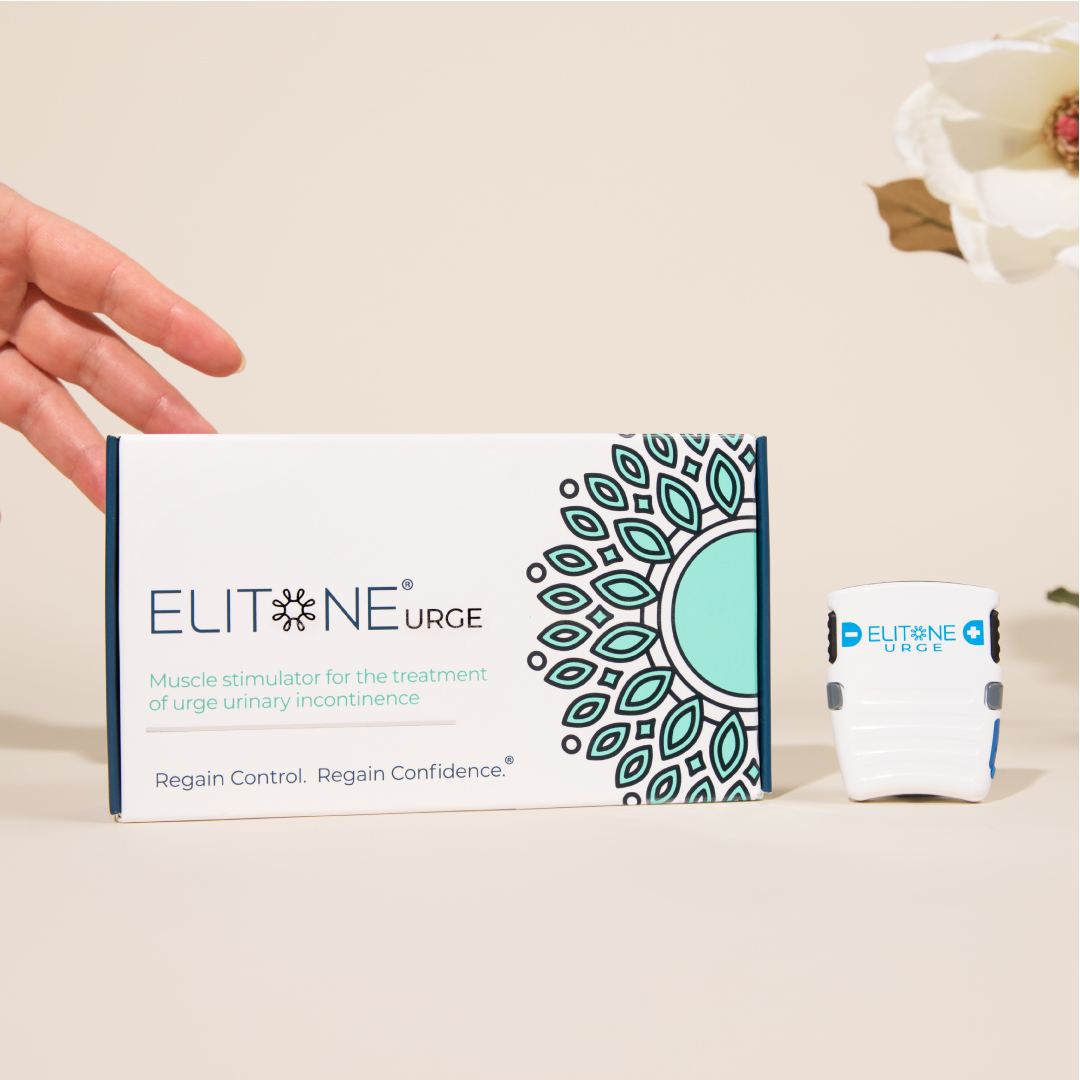
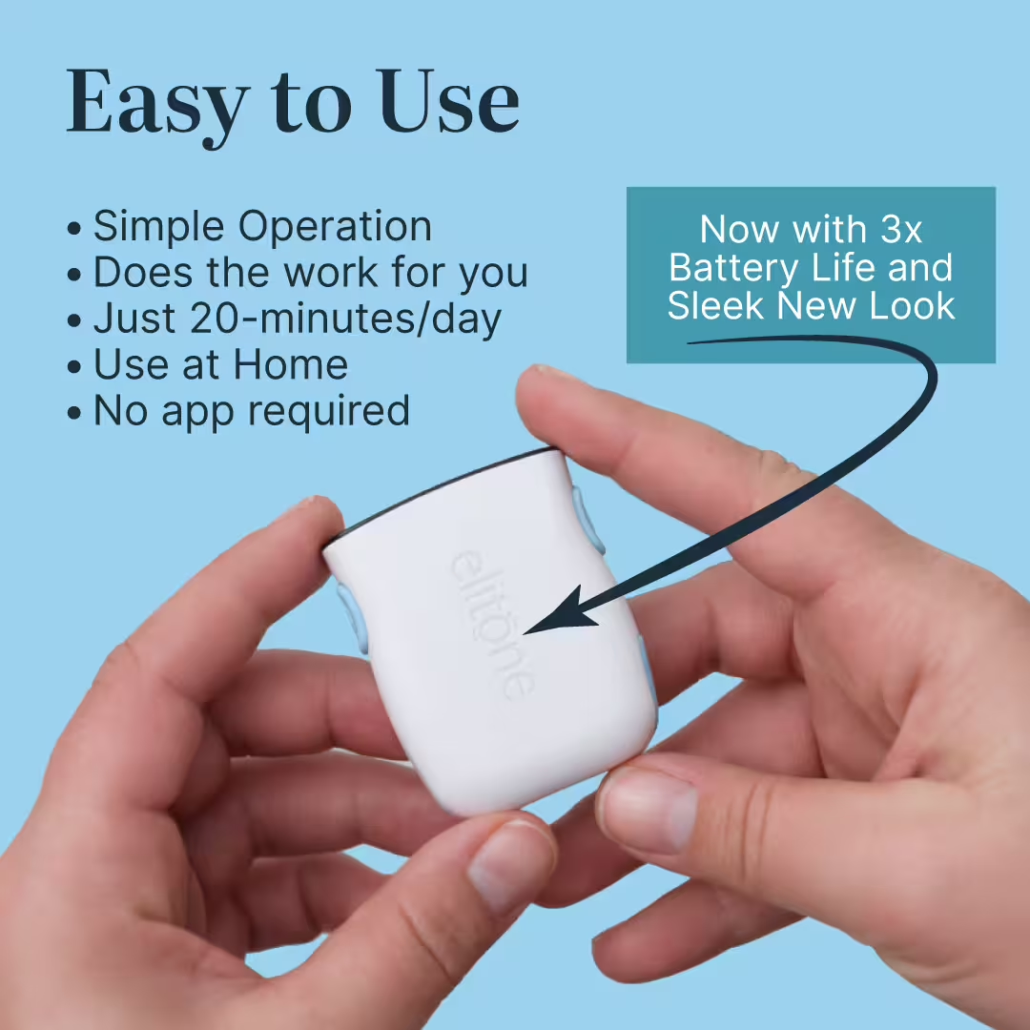
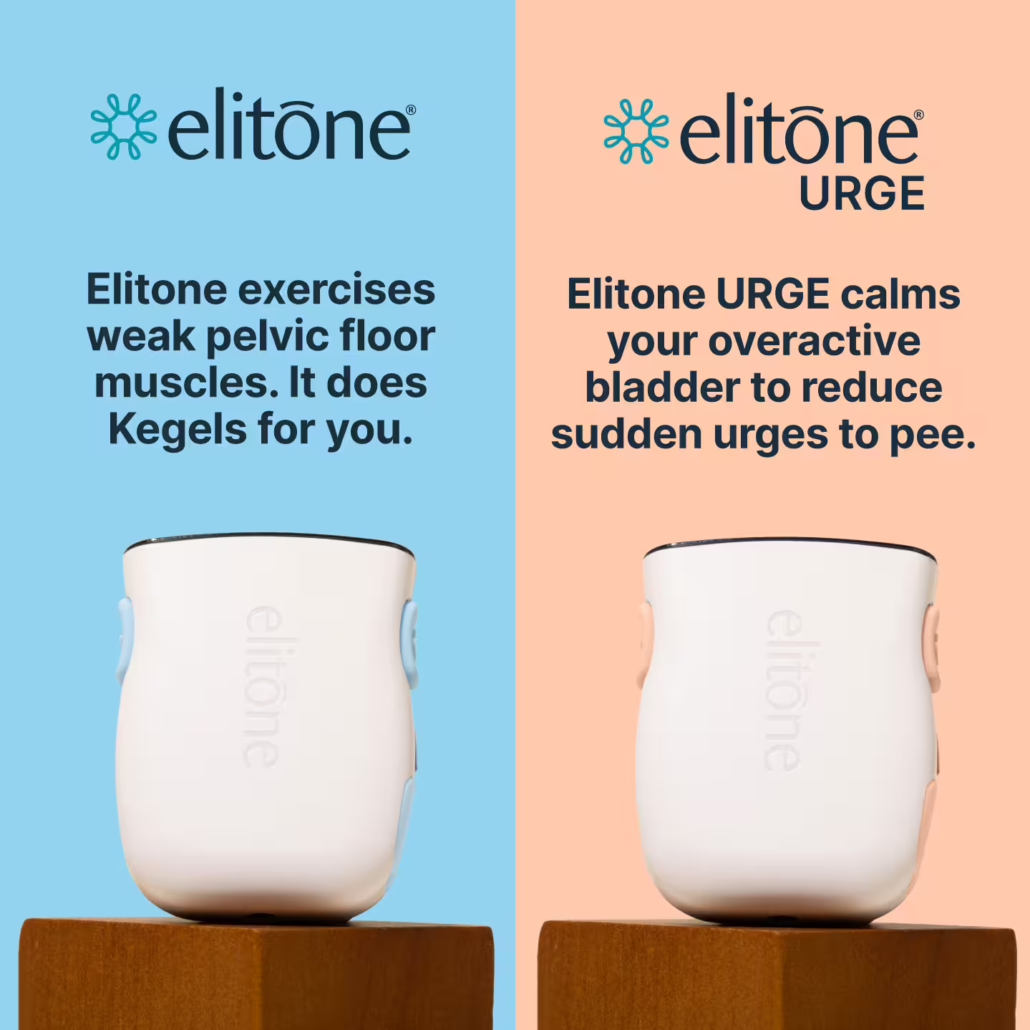
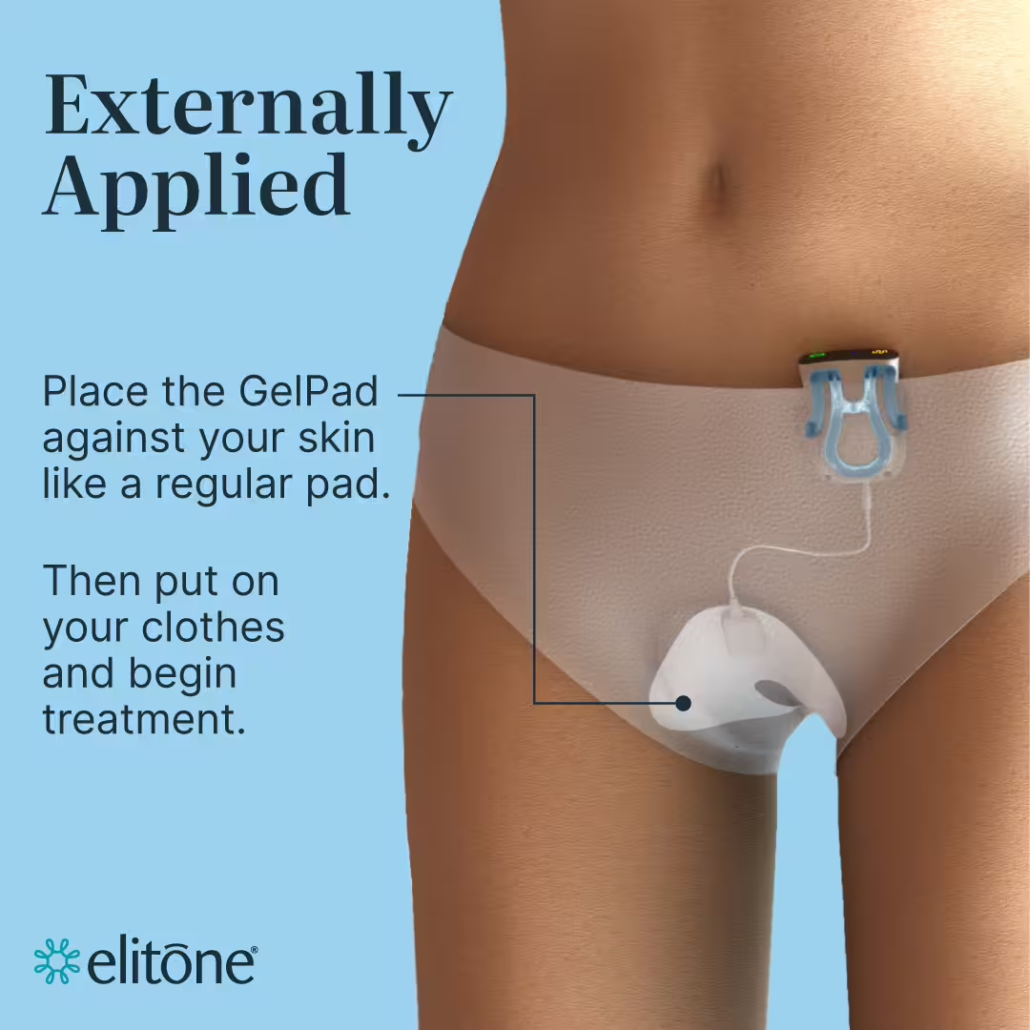
Elitone provides clinical-grade pelvic floor therapy at home for bladder leaks caused by stress incontinence and overactive bladder—including leaks from coughing, laughing, exercise, or sudden urges. 1 in 3 women leak. We aim to make it 0.
Find out how your leaks compare.
TAKE QUIZ
Time Left:
00
:
00 :
00
HRS
MIN
SEC
Time Spent: %%TIMESPENT%%
Time expired. Sorry, you will not be able to continue with this quiz. Please opt-in to see the result.
SEC
HRS
MIN
SEC
SEC
Total Time
[SQBTimeSpent]
0
HRS
0
MIN
0
SEC
1%

Not every day
A text area will be displayed in the frontend when users select this answer.
Add RecommendationAdd TagsView All Assigned Tags1-2 times per day
A text area will be displayed in the frontend when users select this answer.
Add RecommendationAdd TagsView All Assigned Tags3-5 times per day
A text area will be displayed in the frontend when users select this answer.
Add RecommendationAdd TagsView All Assigned TagsMore than 5 times per day
A text area will be displayed in the frontend when users select this answer.
Add RecommendationAdd TagsView All Assigned TagsCONTINUE
When did you start noticing your leaks?

Enter any additional information about the quiz
Less than 1 year ago
A text area will be displayed in the frontend when users select this answer.
Add RecommendationAdd TagsView All Assigned Tags1-5 years ago
A text area will be displayed in the frontend when users select this answer.
Add RecommendationAdd TagsView All Assigned Tags6-10 years ago
A text area will be displayed in the frontend when users select this answer.
Add RecommendationAdd TagsView All Assigned Tags11-20 years ago
A text area will be displayed in the frontend when users select this answer.
Add RecommendationAdd TagsView All Assigned TagsMore than 20 years ago
A text area will be displayed in the frontend when users select this answer.
Add RecommendationAdd TagsView All Assigned TagsCONTINUE
None
A text area will be displayed in the frontend when users select this answer.
Add RecommendationAdd TagsView All Assigned Tags1-2
A text area will be displayed in the frontend when users select this answer.
Add RecommendationAdd TagsView All Assigned Tags3-4
A text area will be displayed in the frontend when users select this answer.
Add RecommendationAdd TagsView All Assigned Tags5+
A text area will be displayed in the frontend when users select this answer.
Add RecommendationAdd TagsView All Assigned TagsCONTINUE
I have to prepare if I'm about to cough, sneeze, or laugh.
A text area will be displayed in the frontend when users select this answer.
Add RecommendationAdd TagsView All Assigned TagsI avoid activities I used to enjoy.
A text area will be displayed in the frontend when users select this answer.
Add RecommendationAdd TagsView All Assigned TagsI worry about my leaks getting worse over time.
A text area will be displayed in the frontend when users select this answer.
Add RecommendationAdd TagsView All Assigned TagsI worry about where the nearest toilet is.
A text area will be displayed in the frontend when users select this answer.
Add RecommendationAdd TagsView All Assigned TagsI feel depressed or hopeless about my leaks.
A text area will be displayed in the frontend when users select this answer.
Add RecommendationAdd TagsView All Assigned TagsNone of the above.
A text area will be displayed in the frontend when users select this answer.
Add RecommendationAdd TagsView All Assigned TagsCONTINUE
I drink coffee.
A text area will be displayed in the frontend when users select this answer.
Add RecommendationAdd TagsView All Assigned TagsI'm overweight.
A text area will be displayed in the frontend when users select this answer.
Add RecommendationAdd TagsView All Assigned TagsI do NOT do Kegels exercises every day.
A text area will be displayed in the frontend when users select this answer.
Add RecommendationAdd TagsView All Assigned TagsI smoke.
A text area will be displayed in the frontend when users select this answer.
Add RecommendationAdd TagsView All Assigned TagsI have NOT talked to a doctor about my leaks.
A text area will be displayed in the frontend when users select this answer.
Add RecommendationAdd TagsView All Assigned TagsNone of the above.
A text area will be displayed in the frontend when users select this answer.
Add RecommendationAdd TagsView All Assigned TagsCONTINUE
Kegel exercises
A text area will be displayed in the frontend when users select this answer.
Add RecommendationAdd TagsView All Assigned TagsPelvic floor physical therapy
A text area will be displayed in the frontend when users select this answer.
Add RecommendationAdd TagsView All Assigned TagsBiofeedback devices
A text area will be displayed in the frontend when users select this answer.
Add RecommendationAdd TagsView All Assigned TagsElectrical stimulation
A text area will be displayed in the frontend when users select this answer.
Add RecommendationAdd TagsView All Assigned TagsSurgery
A text area will be displayed in the frontend when users select this answer.
Add RecommendationAdd TagsView All Assigned TagsI haven't tried any of these treatments
A text area will be displayed in the frontend when users select this answer.
Add RecommendationAdd TagsView All Assigned TagsCONTINUE
< 40
A text area will be displayed in the frontend when users select this answer.
Add RecommendationAdd TagsView All Assigned Tags41-55
A text area will be displayed in the frontend when users select this answer.
Add RecommendationAdd TagsView All Assigned Tags56-64
A text area will be displayed in the frontend when users select this answer.
Add RecommendationAdd TagsView All Assigned Tags65-79
A text area will be displayed in the frontend when users select this answer.
Add RecommendationAdd TagsView All Assigned Tags80+
A text area will be displayed in the frontend when users select this answer.
Add RecommendationAdd TagsView All Assigned TagsCONTINUE
Stress Incontinence
A text area will be displayed in the frontend when users select this answer.
Add RecommendationAdd TagsView All Assigned TagsUrge Incontinence
A text area will be displayed in the frontend when users select this answer.
Add RecommendationAdd TagsView All Assigned TagsMixed Incontinence
A text area will be displayed in the frontend when users select this answer.
Add RecommendationAdd TagsView All Assigned TagsOther
A text area will be displayed in the frontend when users select this answer.
Add RecommendationAdd TagsView All Assigned TagsI'm Not Sure
A text area will be displayed in the frontend when users select this answer.
Add RecommendationAdd TagsView All Assigned TagsCONTINUE
%%QUESTIONANSWERS%%
Skip Opt-in
Almost there...
Your results are on the next page! Enter your email to see how your leaks compare to the 100,000+ women who have taken this quiz. Check your inbox for a discount!
Your Score: %%YOURSCORE%%

The average for women like you is 5.1 on this 10 point scale, where higher numbers mean greater incontinence severity. This is great news! You're searching for a treatment at the perfect time... before your incontinence becomes too severe for non-surgical treatment.
Elitone is convenient and effective, so get started today. Use code StayDry26 at checkout for $30 OFF Elitone. Ready to see which Elitone is right for you?
Elitone is convenient and effective, so get started today. Use code StayDry26 at checkout for $30 OFF Elitone. Ready to see which Elitone is right for you?
START FREE ASSESSMENT
%%CATEGORY_TOTAL_PERCENT%%
%%CATEGORY_TOTAL_NUMBER%%
[CATEGORY_TOTAL_PERCENT]
[CATEGORY_ONLY_PERCENT]
[CATEGORY_TOTAL_NUMBER]
Your Score: %%YOURSCORE%%
The average for women like you is 5.1 on this 10-point scale, where higher numbers mean greater incontinence severity. It looks like you have a lot in common with other women who have purchased Elitone and are enjoying the benefits of fewer bladder leaks.
Now is the perfect time to start treating. Use code StayDry26 at checkout for $30 OFF Elitone. Ready to see which Elitone is right for you?
Now is the perfect time to start treating. Use code StayDry26 at checkout for $30 OFF Elitone. Ready to see which Elitone is right for you?
START FREE ASSESSMENT
%%CATEGORY_TOTAL_PERCENT%%
%%CATEGORY_TOTAL_NUMBER%%
[CATEGORY_TOTAL_PERCENT]
[CATEGORY_ONLY_PERCENT]
[CATEGORY_TOTAL_NUMBER]
Your Score: %%YOURSCORE%%
The average for women like you is 5.1 on this 10-point scale, where higher numbers mean that your incontinence is more severe and bothersome. It looks like you may be struggling with incontinence more than most women. It's great that you are researching your treatment options. It's never too late to start treatment. We've spoken with women like you who are now leak-free after using Elitone.
Use code StayDry26 at checkout for $30 OFF Elitone. Ready to see which Elitone is right for you?
Use code StayDry26 at checkout for $30 OFF Elitone. Ready to see which Elitone is right for you?
START FREE ASSESSMENT
%%CATEGORY_TOTAL_PERCENT%%
%%CATEGORY_TOTAL_NUMBER%%
[CATEGORY_TOTAL_PERCENT]
[CATEGORY_ONLY_PERCENT]
[CATEGORY_TOTAL_NUMBER]
Retake
YOUR TOTAL POINTS
0