FAQs
What is the first-line treatment for stress urinary incontinence?
Conservative treatment is usually the first step. This can include pelvic floor muscle training, pelvic floor physical therapy, lifestyle changes, and devices that strengthen or support the pelvic floor. If conservative approaches do not provide enough improvement, women may consider office-based procedures or surgery.
What if Kegel exercises are not working?
Kegels may not work well if the wrong muscles are being used, contractions are too weak, exercises are not performed consistently, or the leakage is not primarily caused by pelvic floor weakness. Pelvic floor physical therapy can help confirm proper technique. Neuromuscular electrical stimulation is another option because it can activate pelvic floor muscles automatically rather than relying entirely on voluntary contractions.
Can electrical stimulation help stress incontinence?
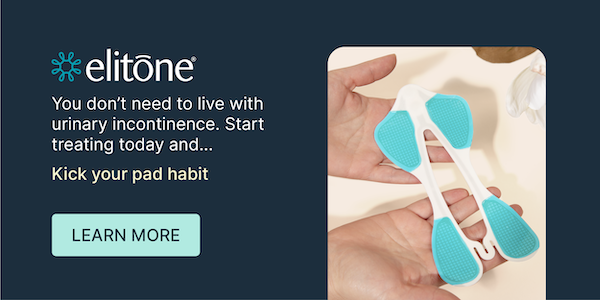
Yes. Neuromuscular electrical stimulation can activate the pelvic floor muscles involved in bladder support and continence. Devices may deliver stimulation internally through a vaginal probe or externally through the skin. Elitone provides external, at-home neuromuscular electrical stimulation without vaginal insertion, allowing repeated pelvic floor contractions without requiring the user to perform each Kegel voluntarily.
Do magnetic pelvic floor chairs work for urinary incontinence?
Research suggests that extracorporeal magnetic stimulation can improve urinary incontinence symptoms and quality of life for some women. However, systematic reviews have found substantial variation in treatment protocols, study quality, and outcomes. Long-term effectiveness and how magnetic chairs compare directly with other treatments remain less certain. Magnetic-chair treatments also generally require multiple clinic visits and may involve substantial out-of-pocket cost.
What is the difference between a pelvic floor chair and electrical stimulation?
Both approaches can produce involuntary pelvic floor contractions, but they deliver energy differently. Magnetic chairs use an electromagnetic field while the patient sits fully clothed in a clinic. Neuromuscular electrical stimulation uses electrical signals delivered through electrodes and may be provided through an internal probe or externally through the skin. Some electrical stimulation devices, including Elitone, are designed for treatment at home.
Are urethral bulking injections a permanent treatment?
Not necessarily. Urethral bulking agents add volume around the urethra to help it close more effectively during coughing, exercise, or other activities that increase abdominal pressure. They are less invasive than sling surgery, but the effect may decrease over time and repeat injections may be necessary.
When should surgery be considered for stress incontinence?
Surgery may be considered when stress incontinence significantly affects quality of life and conservative or less invasive treatments have not provided enough improvement. Midurethral sling surgery is one established surgical option, but the best choice depends on symptoms, medical history, previous treatments, personal preferences, and discussion with a qualified clinician.
Can stress and urge incontinence be treated the same way?
Not always. Stress incontinence typically involves leakage with coughing, sneezing, exercise, or other increases in abdominal pressure, while urge incontinence involves a sudden strong need to urinate followed by leakage. Strengthening-oriented treatments are commonly used for stress incontinence, while urge incontinence may require bladder training, medications, bladder-calming stimulation, Botox, or nerve-based therapies. Mixed incontinence includes both types and may require treatment that addresses both components.
Which stress incontinence treatment is best?
There is no single treatment that is best for every woman. The right option depends on the severity and type of leakage, whether pelvic floor weakness is present, previous treatments, comfort with internal devices or procedures, cost, convenience, and whether you prefer an at-home or office-based treatment. Many women start with conservative options before considering injections or surgery.