Table of Contents
What Are Kegel Balls?
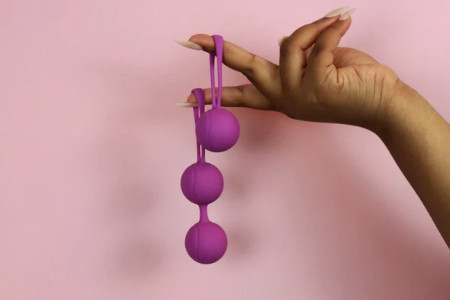
Kegel balls are small weighted devices placed inside the vagina to add resistance or sensory feedback during pelvic floor exercise. They are designed to make it easier to become aware of the pelvic floor muscles and, for some users, to make Kegel exercises more challenging.
Some Kegel balls contain a smaller weight that moves inside the outer ball as you change position or walk. This movement can provide additional sensory feedback and encourage the pelvic floor muscles to respond.
Kegel Balls vs. Kegel Weights: What’s the Difference?
The terms Kegel balls and Kegel weights are often used interchangeably, but they are not always the same thing. Some Kegel balls contain an internal moving weight, while vaginal weights or cones are often designed to provide graduated resistance that the pelvic floor muscles work to retain. Designs vary by product.
Both are intended to make pelvic floor exercise more noticeable or challenging, but they work a little differently. Kegel balls provide movement and sensory feedback, while Kegel weights are more directly focused on progressive resistance.
Some women use either type to help identify the pelvic floor muscles or add resistance once they already know how to perform a correct Kegel. If you are new to pelvic floor exercise, it is usually better to first learn how to perform a correct Kegel contraction before adding resistance.
Benefits of Kegel Balls and Weights
Kegel balls and vaginal weights can be useful for women who already understand how to contract and relax the pelvic floor and want to make their exercise routine more challenging.
Potential benefits include:
- Added resistance: Vaginal weights can increase the challenge of pelvic floor exercise in much the same way resistance is added when training other muscle groups.
- Improved muscle awareness: The presence or movement of the device can provide sensory feedback that helps some users become more aware of the pelvic floor.
- Progressive training: Some weight systems allow you to begin with a lighter weight and gradually increase resistance as strength improves.
- Muscle identification: For some women, the presence of the device makes it easier to recognize which pelvic floor muscles need to contract to keep the weight in place.
- More variety: Adding resistance can provide another way to progress beyond basic Kegel exercises.
However, Kegel balls and weights still require you to voluntarily contract the correct muscles. They are not a substitute for learning good technique, and they are not appropriate for every type of pelvic floor dysfunction.
How to Use Kegel Balls in 4 Steps
Step 1: Start with the Right Size and Weight
If you are new to Kegel balls or vaginal weights, begin with a larger, lighter device that is easier to control. More advanced users may progress to smaller or heavier weights as pelvic floor strength and coordination improve.
Follow the manufacturer’s instructions for the specific product you are using, including cleaning, insertion, removal, and recommended wear time.
Step 2: Insert the Device Comfortably
Empty your bladder before inserting the device, then wash your hands and clean the Kegel ball or weight according to the manufacturer’s instructions. Wash your hands and the device before use. A small amount of water-based lubricant may make insertion more comfortable.
Insert the Kegel ball or weight gently into the vagina according to the product instructions. It should feel secure but not painful. If insertion causes pain or significant discomfort, stop and reassess before continuing.
Step 3: Contract and Relax the Pelvic Floor
Once the device is comfortably in place, gently contract the pelvic floor by squeezing and lifting inward and upward. Avoid bearing down, holding your breath, or tightly gripping your abdomen, buttocks, or thighs.
Hold the contraction for a few seconds, then fully relax. As with regular Kegels, the relaxation phase is important. The goal is not to keep the pelvic floor clenched continuously while the device is inserted.
Some women also practice while standing or moving once they are comfortable with the device. If you feel the weight slipping, that may provide feedback that the pelvic floor has relaxed or fatigued.
When you are finished, relax the pelvic floor before gently removing the device using its retrieval cord or loop. Clean and dry it according to the manufacturer’s instructions before storing it.
Step 4: Progress Gradually
As pelvic floor strength improves, you may gradually increase the amount of resistance or the challenge of the exercise, depending on the type of Kegel ball or weight system you are using.
Progress slowly. Heavier is not automatically better, and excessive resistance can lead to fatigue or poor technique. A controlled contraction with complete relaxation is more important than using the heaviest weight available.
How to Choose the Right Kegel Balls or Weights
Kegel balls and vaginal weights come in different sizes, weights, shapes, and materials. The right choice depends on your experience level, pelvic floor strength, comfort, and the type of training you want to do.
Size
Many Kegel balls are approximately 30 to 35 mm in diameter, although products vary. Beginners often assume that a smaller ball will be easier to use, but the opposite can be true. A somewhat larger ball can be easier to feel and retain, while smaller devices may require more pelvic floor strength and control.
The device should feel secure and comfortable once inserted. It should not cause pain, significant pressure, or feel as though you must continuously clench as hard as possible to keep it in place.
Weight
Start with a lighter weight if you are new to resistance-based pelvic floor exercise. As your strength and coordination improve, you can gradually progress to heavier resistance.
Heavier is not automatically better. If the weight causes you to bear down, hold your breath, tighten your abdomen or buttocks, or lose good pelvic floor technique, the resistance is too challenging.
Kegel Balls vs. Progressive Weight Sets
If your goal is sensory feedback and movement, a Kegel ball with an internal moving weight may be appealing. If your goal is more structured resistance training, a set of vaginal weights or cones with progressively heavier resistance may make it easier to track progression.
Material and Design
Choose a smooth, nonporous device that is easy to clean and designed for vaginal use. Many products are made from silicone or other smooth, cleanable materials. If choosing an internal device, look for materials and cleaning instructions specified by the manufacturer.
A retrieval cord or loop can also make removal easier. Avoid products with rough surfaces, damaged coatings, cracks, or materials that are difficult to clean thoroughly.
Choose for Your Goal, Not the Highest Weight
The goal of Kegel balls and weights is to improve pelvic floor control and strength—not simply to retain the smallest or heaviest device available. Progress when you can use the current level comfortably while maintaining normal breathing, good pelvic floor technique, and complete relaxation between contractions.