Why Leakage Happens After Prostate Surgery
During prostate surgery, the urinary sphincter and surrounding pelvic floor muscles can be affected. Even when surgery is successful from an oncologic perspective, the systems responsible for bladder control often require time to recover.
In the early weeks, many men notice leakage when standing, walking, lifting, or coughing. Some continue to rely on incontinence pads at follow-up visits around six weeks or three months. This variation is normal. Recovery depends on factors such as sphincter function, surgical technique and nerve preservation, baseline urinary function, pelvic floor function, and overall healing.
For a fuller explanation of the recovery process and expected timeline, see Urinary Incontinence After Prostate Surgery: What Men Should Expect.
As recovery progresses, men often begin exploring temporary management tools to help them stay active and confident while continence improves.
What Is a Penile Clamp?
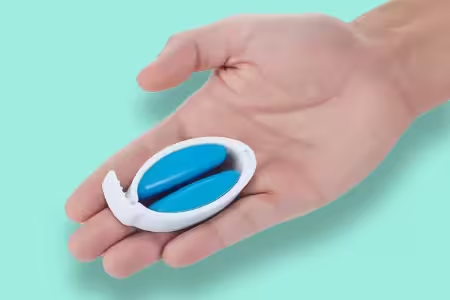
A penile clamp is a small external device worn around the penis that applies pressure to the urethra. By compressing the urethral channel, it can help prevent urine from leaking while the device is in place.
It is important to understand that a clamp does not treat the underlying cause of incontinence. It manages the symptom. When the clamp is removed, leakage may still occur because the underlying continence mechanism, including the urinary sphincter and pelvic floor, has not been changed by the clamp.
Most men use clamps during the day for specific situations, such as social events, travel, or physical activity. They are not intended for continuous wear and must be removed regularly to urinate.
If your main concern is navigating work, exercise, driving, or travel while recovery continues, see Managing Leaks After Prostate Surgery.
Design Variations and What Affects Comfort
While most penile clamps operate on the same principle of urethral compression, their design can influence comfort and usability.
Some models use ratcheting or notched systems to adjust pressure, while others rely on sliding mechanisms. The ability to fine-tune pressure is important, since too much compression can affect circulation, while too little may not adequately control leakage.
Materials also vary. Many clamps include foam or silicone padding where the device contacts the skin, which can help reduce irritation during wear. Hinged designs may make a clamp easier to open and close, particularly for men with limited dexterity.
In practice, proper fit and correct usage matter more than any single design feature. A well-fitted device used correctly will generally be safer and more comfortable than a poorly adjusted one.
How to Use a Clamp Safely
Safety is a critical part of using a penile clamp. Because the device works by applying pressure, it must be used in a way that protects circulation and skin integrity.
Most recommendations call for releasing the clamp regularly, generally every one to two hours, to allow blood flow to return to normal. The device should be removed completely when urinating and should not be worn overnight.
Monitor for warning signs such as redness, skin irritation, numbness, discoloration, or discomfort. These may indicate that the clamp is too tight or being worn for too long.
Clamps may not be appropriate for men with certain vascular conditions, reduced sensation, or swelling. Discuss their use with your physician before starting.
Benefits and Limitations
Penile clamps can provide immediate, situational control of leakage. Some men find them useful for activities where confidence is especially important, such as returning to work, attending social events, exercising, or traveling.
However, that benefit comes with limitations. Clamps require regular removal and repositioning, and some men find them uncomfortable over time. More importantly, they do not strengthen the pelvic floor or improve the body’s ability to control urine independently.
For many men, clamps function best as a temporary or situational management tool rather than a long-term recovery strategy.
Where Clamps Fit in Recovery
Recovery after prostate surgery typically unfolds over several months. Many men experience gradual improvement between six weeks and three months, with continued progress beyond that point.
At follow-up visits, clinicians may reassess pad use, leakage severity, and progress with pelvic floor rehabilitation. Conservative approaches are generally used during recovery before invasive treatment is considered.
Within this framework, clamps can play a supportive role by managing symptoms during daily activities. However, they are not a substitute for therapies intended to restore pelvic floor muscle function.
For more on the broader treatment and recovery pathway after prostate cancer surgery, see Prostate Cancer Treatment.